
Planning Wedding Stationery with Clarity and Ease
Timing, Process and When to Start
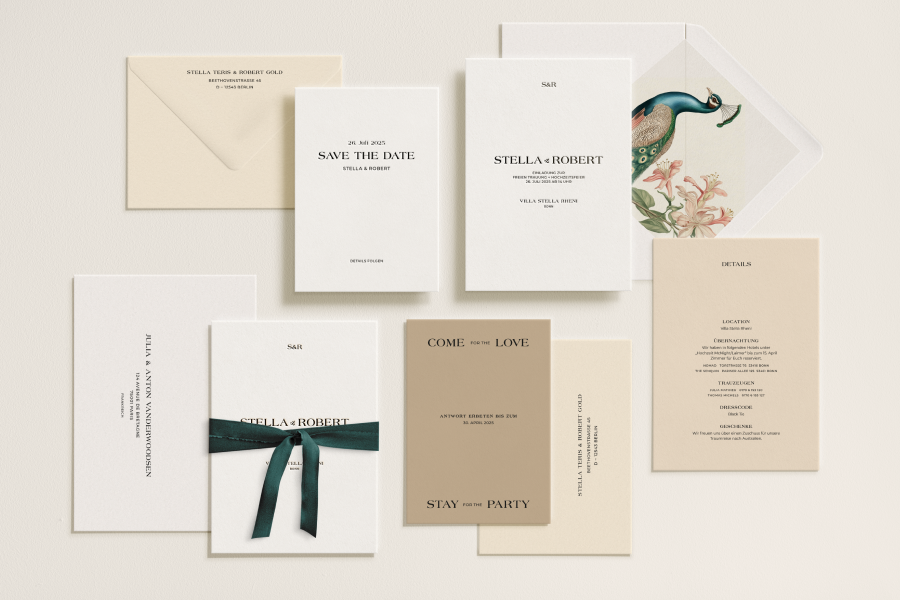
Timing in wedding stationery is rarely about dates alone. It is about creating enough space for decisions to feel considered rather than rushed.When timing is approached early, the process becomes calmer. Materials are chosen with intention. Design evolves with clarity.Good timing does not accelerate decisions. It allows them to settle.
When to Start Thinking About Wedding Stationery
Many couples begin thinking about invitations once key elements are confirmed. Often, this happens later than ideal.
Wedding stationery benefits from early consideration. Not because every detail must be decided immediately, but because thoughtful design needs room to develop. Starting early creates flexibility. It removes pressure and allows choices to be made with confidence rather than urgency.
Why a Clear Process Matters
A clear process provides structure, not limitation. Defined steps help decisions fall into place naturally.
Materials, formats and finishes are selected in relation to one another, not in isolation. A structured process aligns design, production and timing. It safeguards quality and creates a sense of
ease throughout the experience.
Collections vs. Custom: How Timing Really Differs
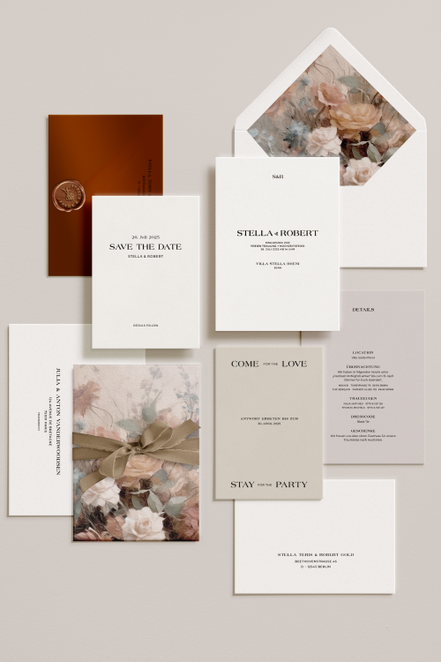
The difference between a curated collection and a custom design lies primarily in the design phase.
When working with a collection, the visual foundation is already defined. Typography, proportions and overall direction are established. The focus shifts to personalisation: wording, colour
choices, paper selection and print techniques.
Depending on clarity and responsiveness, this phase can move efficiently. Personalisation is often completed within one to two weeks after the order is placed.
A custom design follows a different rhythm.
Here, the design is developed from the ground up. Materials are explored, illustrations or bespoke elements may be created, and several design directions are presented, reviewed and refined in
dialogue. This creative phase requires time.
Not because it is slow, but because it is deliberate. Depending on scope and feedback cycles, design development typically unfolds over four to six weeks.
Production Timelines: What Both Paths Have in Common
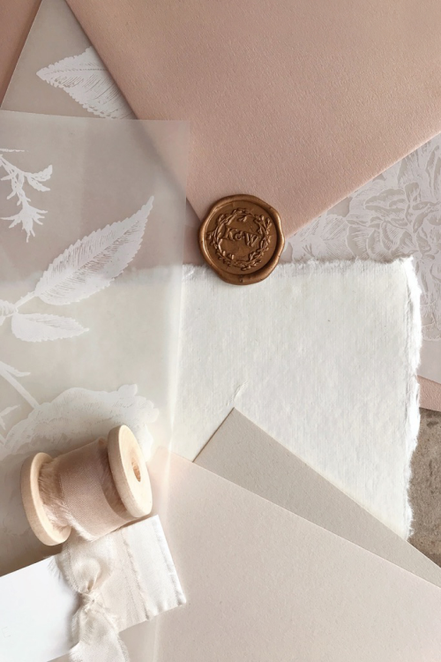
Once a design is finalised, production follows similar principles for both approaches. Printing, finishing and any form of handwork require care and precision. Whether a suite is personalised or fully bespoke, production usually takes between two and four weeks. The exact duration depends on complexity. Processes such as letterpress, embossing, drying times or manual assembly add depth and quality, but also require space in the timeline. Production is not the phase where time can be shortened without affecting the result.
Time Creates Space for Quality
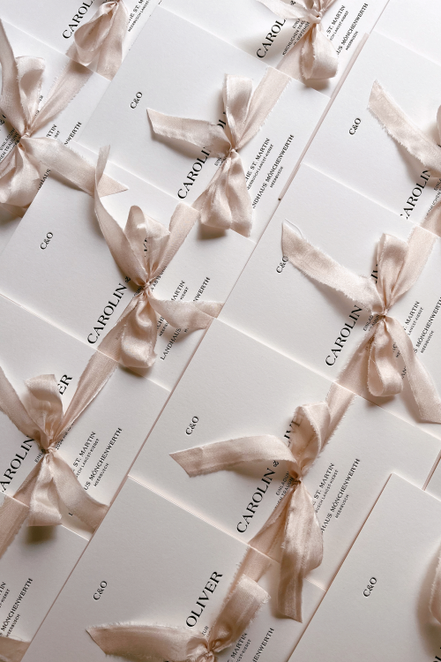
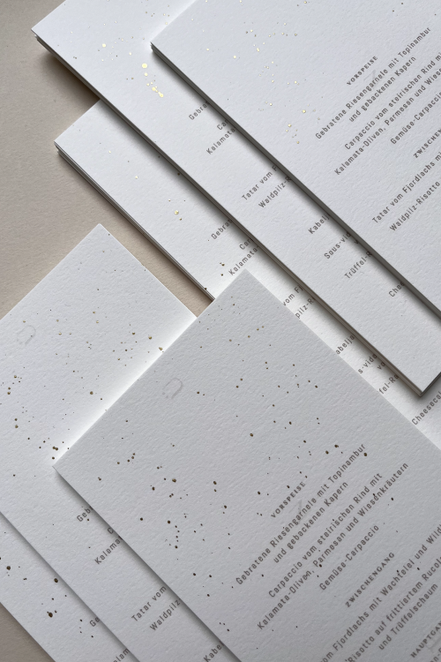
Quality unfolds over time. It lives in thoughtful decisions, careful production and a process that respects both design and craftsmanship. When wedding stationery is planned with sufficient lead
time, it becomes more than a logistical task.
It becomes part of the overall design narrative. Time does not complicate the process. It gives it clarity.